
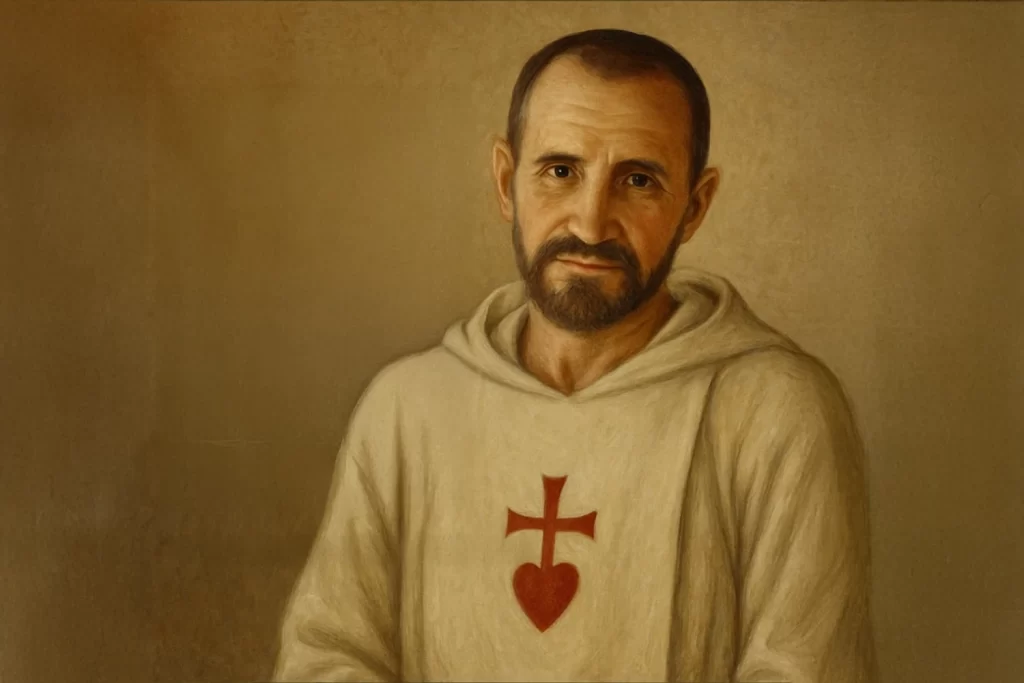
Faith is often illuminated by the lives of extraordinary individuals whose devotion and example inspire others to live more closely in accordance with God’s will. One such figure is Saint Charles de Foucauld (1858–1916), a man whose journey of transformation, humility, and silent service has profoundly influenced religious communities around the world, including the Little Sisters of Christ (LSC). His life exemplifies the beauty of a faith lived quietly, authentically, and fully devoted to God.
Born in Strasbourg, France, Charles de Foucauld experienced early tragedy, losing both parents and being raised by his grandfather. Despite showing intellectual brilliance, he initially drifted from faith, seeking fulfillment in worldly pursuits. His time in the French army and subsequent explorations of Morocco exposed him to diverse cultures and spiritual practices, which gradually rekindled his search for God. By 1886, he rediscovered Catholic faith, dedicating himself to a life of devotion, simplicity, and service.
Charles’ defining inspiration came from the hidden life of Jesus in Nazareth. He admired the carpenter of Nazareth, who lived in humble obscurity, working quietly yet profoundly impacting the world through obedience, love, and silent witness. Charles recognized that holiness and closeness to God were not reserved for grand gestures or public recognition, but could be found in ordinary life, lived with humility and devotion. His insight shaped a spirituality that embraces simplicity, contemplation, and selfless service.
After leaving the Trappist monastery, Charles chose to live among the people he served, adopting their customs and working alongside them as a gardener and sacristan in Nazareth and Jerusalem. He was ordained a priest in 1901 and later settled in Tamanrasset, Algeria, living among the Tuareg people. His life there was marked by prayer, fraternal love, and total dedication to God, despite extreme solitude and minimal worldly comfort. He sought neither fame nor recognition, instead embodying Christ’s call to serve quietly, faithfully, and humbly.
The Little Sisters of Christ were deeply inspired by Charles’ example. Founded in 1975 by Little Sister Nirmala Mary, LSC embraced the Nazareth spirituality he advocated: living the Gospel through prayer, humility, simplicity, and acts of loving service. The sisters’ mission—serving the poor, marginalized, and forgotten—is a direct reflection of his teachings. Like Charles, they believe that true holiness is cultivated in ordinary tasks and small, unnoticed acts of kindness, offered as prayerful devotion to God.
At the core of Charles’ spirituality is a commitment to silent witness. He taught that actions often speak louder than words, and that living a life rooted in virtue, prayer, and humility can proclaim the Gospel more effectively than public preaching. The Little Sisters of Christ have embraced this principle wholeheartedly. Their communities, known as “Family of Nazareth” houses, are modeled after the Holy Family, emphasizing prayer, simplicity, and fraternity. Through these small, prayerful communities, they embody the hidden life of Christ, offering a living example of faith in action.
Saint Charles de Foucauld also emphasized the importance of love for the poor and marginalized. He believed that serving those whom society neglects is a direct encounter with Christ. This principle guides every aspect of LSC’s mission. The sisters dedicate themselves to supporting those in need—elderly, infirm, or isolated—through acts of practical care, spiritual guidance, and companionship. Their service is not performed for recognition but as a humble offering to God, echoing Charles’ own life of selfless dedication.
Another critical aspect of Charles’ influence is the value of simplicity and poverty. He lived with minimal possessions, fully dependent on Divine Providence, and encouraged others to embrace simplicity as a path to freedom and holiness. The Little Sisters of Christ adopt this principle, living lives of modesty, detachment from materialism, and reliance on God’s providence. This approach allows them to focus entirely on prayer, service, and community, creating an environment where love and devotion flourish over worldly concerns.
Charles’ teachings also underscore the importance of obedience and trust in God’s will. By surrendering fully to God, he demonstrated that spiritual freedom and peace come not from controlling circumstances, but from accepting Divine guidance. The sisters, following his example, seek to align their daily actions with God’s will, approaching their work and relationships with humility, patience, and prayerful discernment.
The legacy of Saint Charles de Foucauld continues to inspire countless religious communities worldwide. The Little Sisters of Christ carry forward his vision by integrating Nazareth spirituality into their daily lives. Their commitment to prayer, humility, service, and simplicity reflects his ideals, offering a model for anyone seeking to live authentically in Christ. Charles’ life reminds us that sanctity is attainable not only through extraordinary deeds but also through faithful devotion to God in ordinary life.
For the modern Christian, the example of Saint Charles de Foucauld is profoundly relevant. In a world focused on visibility, achievement, and recognition, he teaches that holiness often grows quietly, in unnoticed acts of love, patience, and service. The Little Sisters of Christ embody this teaching, providing living proof that true faith is expressed in how we care for others, live simply, and remain devoted to God in every circumstance.
In conclusion, Saint Charles de Foucauld’s life and teachings continue to inspire the mission and spirituality of the Little Sisters of Christ. His devotion to the hidden life of Jesus, commitment to prayer, humility, and selfless service serve as a guide for the sisters and a model for all believers. By following his example, the Little Sisters of Christ demonstrate that a life of faith lived quietly, humbly, and generously can profoundly transform individuals and communities, reflecting the enduring power of Christ’s love in the world.